Cool Roof Installation for Rhode Island Commercial Buildings
A dark commercial roof in full July sun can climb well past 150 degrees, and every bit of that heat works against the building underneath it. It drives up the cooling load, bakes the membrane, accelerates aging, and radiates down into the top floor. A cool roof flips that equation. By using a reflective surface that bounces sunlight away and releases the heat it does absorb, a cool roof keeps the membrane and the building below it markedly cooler through the warm months. We install reflective roof systems on commercial and industrial buildings across all 39 Rhode Island cities and towns, and we size the approach to how each building is used rather than treating reflectivity as a one-size answer.
Most cool roofs we install here are flat or low-slope, which is where reflectivity does the most good because the surface faces the sky directly with nothing to shade it. The right system depends on the deck, the existing roof, the rooftop equipment, and what the space below is used for, and we work through all of that before recommending a product.
The Cool Roof Systems We Install
There is no single cool roof material. The reflective options we put on Rhode Island commercial buildings each suit different conditions:
- TPO membrane. A white, heat-welded single-ply membrane is the most common cool roof we install on large commercial roofs. It reflects strongly out of the box, welds into a continuous watertight surface, and keeps cooling loads down across wide roof areas like warehouses and big-box retail.
- PVC membrane. Also a reflective heat-welded single-ply, PVC earns its place where the roof is exposed to grease, chemicals, or constant ponding, including restaurant and food-related buildings where exhaust hits the surface. It delivers the same reflectivity as TPO with added chemical resistance.
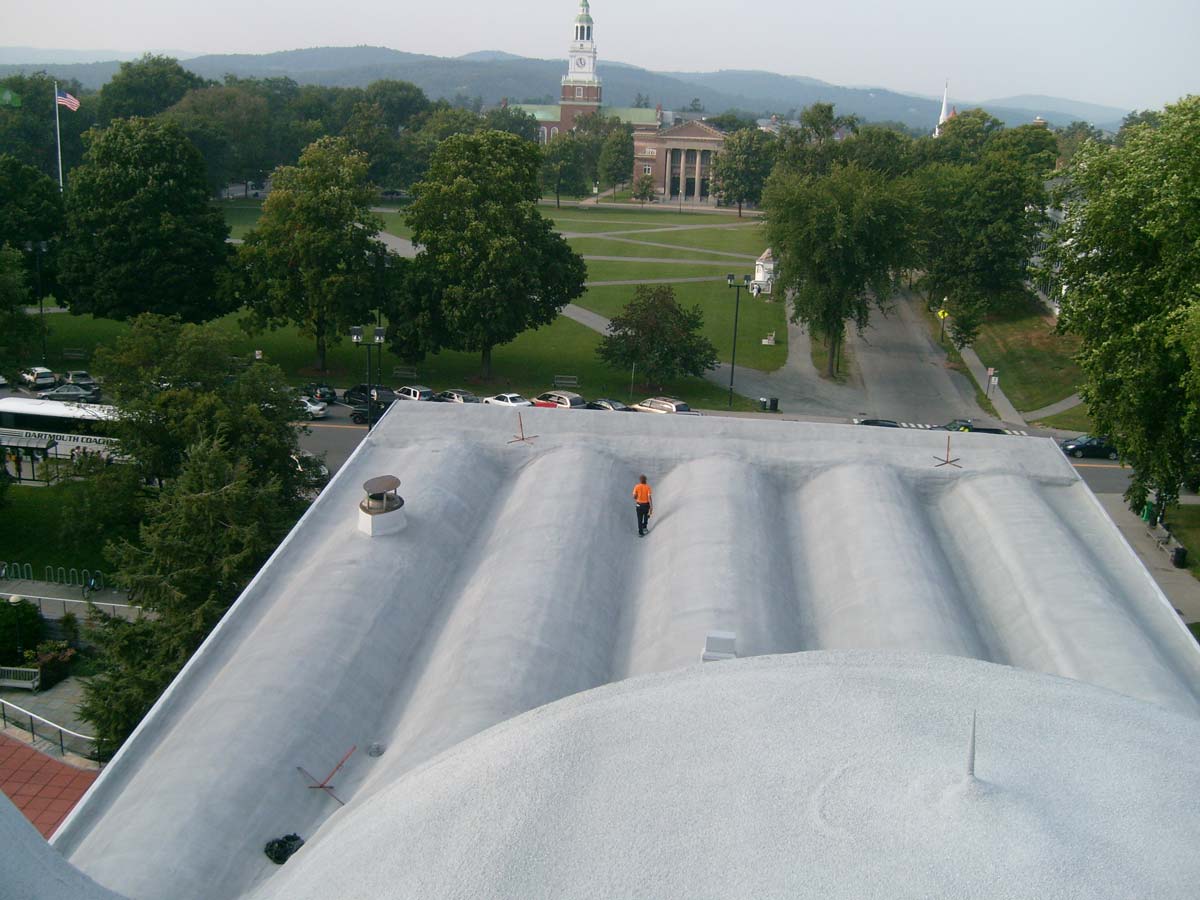
- Reflective coatings. Silicone and acrylic coating systems can turn an existing, sound but weathering roof into a reflective one without a full tear-off. Applied over a properly prepared membrane, a coating restores the reflective surface, seals minor seams, and extends service life, which is often the right call when the roof has life left but the budget is tight.
We match the system to the building, not the other way around. A reflective coating over a sound modified bitumen roof and a new white TPO membrane on a tear-off are very different projects, and the cheaper line item is not automatically the better long-term value.
How a Cool Roof Pays Off in the Rhode Island Climate
It is fair to ask whether reflectivity makes sense in a state with real winters, and the honest answer is that the calculation is different here than it is in the Sun Belt. Rhode Island heats and cools, so a cool roof's summer savings are weighed against the fact that a darker roof might pick up a little useful solar heat in winter. For most commercial buildings here, the summer math still wins. Cooling a large, equipment-heavy commercial space is expensive, the peak cooling demand lines up with the hottest, sunniest stretches, and a reflective roof shaves the worst of that peak. Office buildings, warehouses, and retail spaces that run air conditioning hard through the summer tend to see the clearest benefit.
Beyond the energy bill, reflectivity protects the roof itself. A membrane that runs cooler expands and contracts less with each daily heat cycle, and that reduced thermal movement is one of the quieter reasons cool roofs tend to last longer. In a state where the freeze-thaw cycle already works hard on roofs through the winter, easing the summer heat stress is a real contribution to service life. A cooler top floor also means less strain on rooftop HVAC units that are themselves sitting in that heat.
Where Reflective Roofs Fit Across the State
The buildings that benefit most from a cool roof are spread across Rhode Island's commercial geography. The large industrial roofs at the Quonset Business Park in North Kingstown cover wide, sun-exposed spans where reflectivity meaningfully cuts cooling demand inside warehouse and manufacturing space. Providence's downtown and the buildings around its hospital district carry compact, equipment-dense roofs where keeping the membrane and the interior cooler eases the load on systems that run around the clock. The 19th-century textile-mill buildings in Pawtucket, Woonsocket, and West Warwick, now reworked into offices, studios, and housing, have broad low-slope roofs that often make ideal candidates for a reflective coating that adds years without a full tear-off. On Aquidneck Island and across South County, we account for the salt-laden coastal air when we specify fasteners and edge metal so a reflective roof holds up to more than just the sun.
How We Approach a Cool Roof Project
We start on the roof. Before recommending a reflective system, we look at the existing roof's condition, check the drains and the low spots where water sits, probe for soft, saturated insulation, and assess whether the deck and current membrane can take a coating or call for a tear-off. A reflective coating only performs over a roof that is genuinely sound, so we are honest about when a building is past that point and a new membrane is the better path.
From there we lay out the options in plain terms, with what each one costs, what it should save, and how long it should last. On occupied buildings we plan access, staging, and the work sequence to keep tenants running and keep the building watertight if weather rolls in mid-project. We also coordinate around rooftop equipment so condensers, curbs, and penetrations are properly detailed into the new reflective surface rather than worked around.
Request a Cool Roof Assessment
If you own or manage a commercial building in Rhode Island and you are looking at high summer cooling costs, an aging dark roof, or a top floor that never quite cools off, a reflective roof may be worth a serious look. Reach out to schedule a roof assessment, and we will give you an honest read on whether a cool roof makes sense for your building and what it would take.
 Acrylic Roof Coatings in Providence, RI
 Auto Dealership Roofing in Providence, RI
 Built Up Roofing in Providence, RI
 Church Roofing in Providence, RI
 Commercial Re-Roofing in Providence, RI
 Commercial Roof Inspection in Providence, RI
 Providence
 Warwick