R-Panel Roofing for Commercial and Industrial Buildings
R-panel is the workhorse of exposed-fastener metal roofing. The profile, a wide rib repeating across a flat-pan sheet, gives it strength, fast coverage, and a price point that makes it a sensible choice for warehouses, agricultural buildings, fabrication shops, storage facilities, and metal pre-engineered structures. We install, retrofit, and repair R-panel roofing on commercial and industrial buildings throughout Rhode Island, from the working buildings at the Quonset Business Park in North Kingstown to barns, garages, and shop buildings out in the western towns of the state.
Done right, an R-panel roof is one of the longest-lived and lowest-maintenance commercial roofs you can put on a building. Done wrong, or left unmaintained, the exposed fasteners that make it affordable become its weak point. Most of what we are called to fix on these roofs comes down to fasteners and details, not the panels themselves. That distinction shapes how we install and how we repair.
What R-Panel Is and Where It Fits
R-panel, sometimes called PBR panel, is a through-fastened steel roofing profile. The panels screw directly down through the rib or the flat into the purlins or deck below, with the screw heads and their neoprene washers exposed to the weather. That is its defining trait and its trade-off. Exposed-fastener systems install quickly and economically and are easy to repair panel by panel. Standing-seam systems hide their fasteners and float on clips, which costs more but eliminates thousands of roof penetrations. For many Rhode Island commercial buildings, especially low-slope-to-steep utilitarian structures where budget matters and the roof pitch sheds water well, R-panel is the right tool.
We typically install R-panel in 24 or 26 gauge steel with a Galvalume substrate and a baked-on Kynar or SMP finish. The coating is not cosmetic. On a coastal state like Rhode Island, the finish and the substrate are what stand between your roof and corrosion, and we spec them accordingly.
Common applications we roof
- Warehouse and distribution buildings, including the metal-building stock around Quonset and along the I-95 industrial corridor
- Fabrication shops, machine shops, and light manufacturing
- Storage facilities, mini-storage, and cold storage
- Agricultural and equipment buildings in the rural western towns
- Pre-engineered metal buildings where R-panel was the original roof
Installation Done for a Coastal, Cold-Winter State
The two things that kill an R-panel roof early are bad fastening and bad detailing, and both are made worse by Rhode Island's climate. Here is how we account for it.
Fasteners that are placed to last
We use long-life coated or stainless screws with quality EPDM washers, driven to the correct depth so the washer compresses and seals without being crushed. Overdriven screws split the washer; underdriven screws never seal. On a roof with thousands of fasteners, getting that right across the whole field is the difference between a roof that is tight for decades and one that weeps at every penetration within a few winters. Salt air on Aquidneck Island, around Newport, down through South County, and out to Block Island accelerates corrosion at every exposed screw head, so on coastal buildings we are especially deliberate about fastener selection.
Details where water actually gets in
Open field panel rarely leaks. Ridges, eaves, valleys, endlaps, sidewall and headwall flashings, and roof penetrations are where R-panel roofs fail. We close ridges and eaves with profiled foam closures so wind-driven rain and snow cannot blow up under the panel, lap and seal sheets with butyl tape and stitch screws, and flash every curb and pipe by hand. New England's wind-driven nor'easters push rain and snow horizontally, and a closure left out or a lap left unsealed is exactly where that weather finds its way in.
Movement, snow load, and freeze-thaw
Metal expands and contracts with temperature, and over a Rhode Island year the swing is large. We detail the roof to allow that movement without backing fasteners out or oil-canning the panels. We confirm the panel gauge and purlin spacing are right for local snow loads, because heavy wet nor'easter snow concentrates real weight on a roof, and we pay attention to freeze-thaw at laps and penetrations, where water that gets in and freezes will pry a detail open over a few seasons.
Retrofits and Repairs on Existing R-Panel Roofs
You do not always need a new roof. A great deal of what we do on metal is bringing an existing R-panel roof back to watertight.
Re-screwing and resealing
When the panels are sound but the roof has begun to leak at the fasteners, the fix is often a full re-screw, replacing the original screws with the next size up so they bite fresh metal, and resealing laps and penetrations. This is a fraction of the cost of replacement and can add many years to a roof.
Metal-over-metal retrofit
When an old R-panel roof is too far gone to re-screw but the structure is solid, we can install a new metal roof over the existing one on a sub-purlin or hat-channel system, often adding insulation in the process. This avoids a full tear-off and keeps the building dry and in use during the work.
Restoration coatings
For an aging but structurally sound metal roof, a reinforced coating system can seal the seams and fasteners and add a bright reflective surface, extending service life without replacement. We will tell you which of these paths fits your roof and which does not.
Statewide Coverage and Honest Assessments
We cover all 39 Rhode Island cities and towns, and we treat a small re-screw job with the same care as a full reroof, because the small ones are how you avoid the big ones. If you have an R-panel or other exposed-fastener metal roof that is leaking, rusting at the fasteners, or simply showing its age, or if you are planning a new metal building and want it roofed to last on the coast, get in touch. We will get up on the roof, look at the fasteners, laps, and flashings, and give you a straight assessment of what it needs.
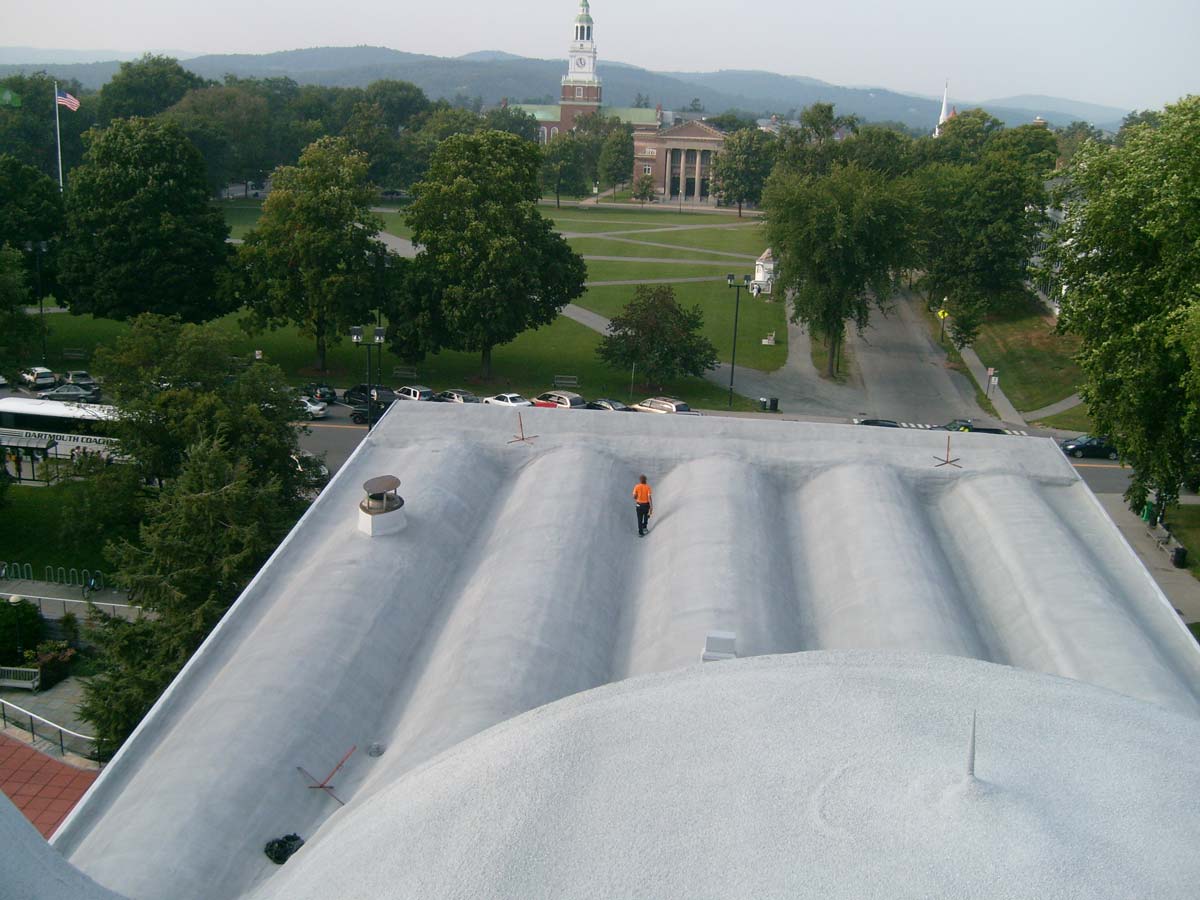 Acrylic Roof Coatings in Providence, RI
 Auto Dealership Roofing in Providence, RI
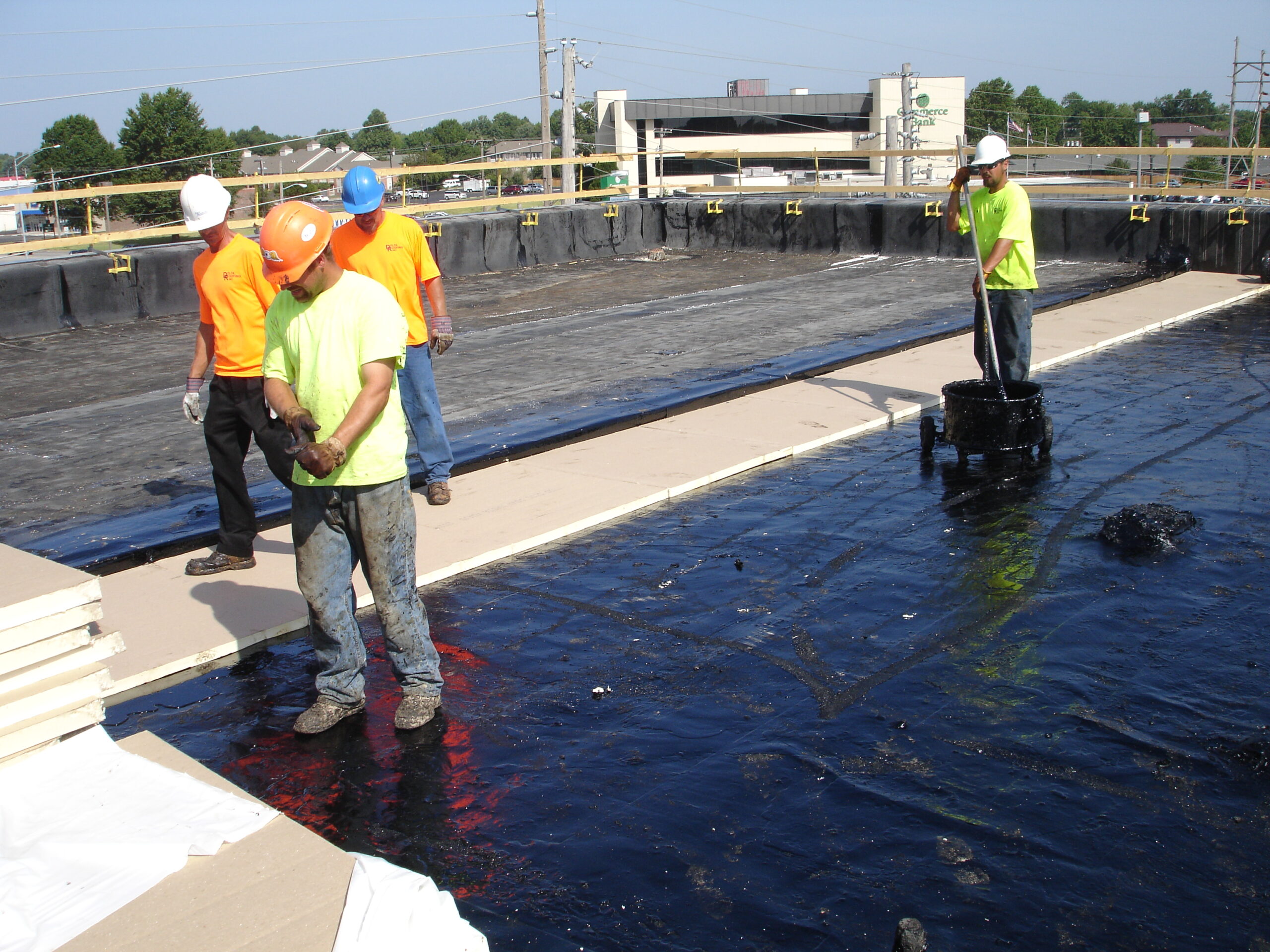 Built Up Roofing in Providence, RI
 Church Roofing in Providence, RI
 Commercial Re-Roofing in Providence, RI
 Commercial Roof Inspection in Providence, RI
 Providence
 Warwick