
Modified Bitumen Roofing for Rhode Island Commercial Buildings
Modified bitumen is the closest thing the low-slope world has to a built-up roof you can install in modern conditions. It takes the multi-ply, redundant construction that has protected flat commercial roofs for a century and rebuilds it with polymer-modified asphalt sheets that flex, seal, and stand up to abuse far better than the old gravel-and-tar assemblies ever did. For buildings that carry rooftop equipment, see regular foot traffic, or have the kind of complicated detailing you find on a century-old mill, mod-bit is often the most sensible membrane we can put down. We install it statewide across all 39 Rhode Island cities and towns.
The appeal here is layers. A single-ply membrane is one sheet between the inside of your building and the weather. A modified bitumen roof is typically two or more reinforced plies bonded into a single mass, so a puncture or a seam problem in one layer does not become a leak in the room below. On Rhode Island's older commercial stock, that redundancy matters. The 19th-century textile mills of Pawtucket, Woonsocket, and West Warwick were built with sprawling low-slope roofs that have been cut into and added onto for generations, and the kind of dense penetration detailing those roofs carry is exactly where a heavier multi-ply system earns its keep.
SBS and APP: The Two Families
Modified bitumen comes in two chemistries, and the difference is not academic. It changes how the sheet behaves and how we install it.
SBS-Modified (Styrene-Butadiene-Styrene)
SBS modifiers make the asphalt rubbery and elastic. The sheet stretches and recovers, which is what you want on a roof that expands and contracts through hard freeze-thaw cycles every winter. SBS sheets can be torch-applied, mopped in hot asphalt, or set in cold adhesive, and they pair naturally with self-adhered base plies that keep open flame off the deck. For most Rhode Island buildings, where thermal movement and winter stress drive failures, SBS is the workhorse we reach for first.
APP-Modified (Atactic Polypropylene)
APP modifiers make the asphalt more plastic and UV-stable, producing a tougher, more rigid sheet that is almost always torch-applied. APP holds up well to long sun exposure and is a strong choice on roofs with good drainage and few obstructions. We specify it where its weathering strength fits the building, and we manage torch work carefully on combustible mill decks.
How a Modified Bitumen Roof Goes Together
A mod-bit system is assembled in layers, each with a job. We tailor the buildup to the deck, the slope, and how the building gets used.
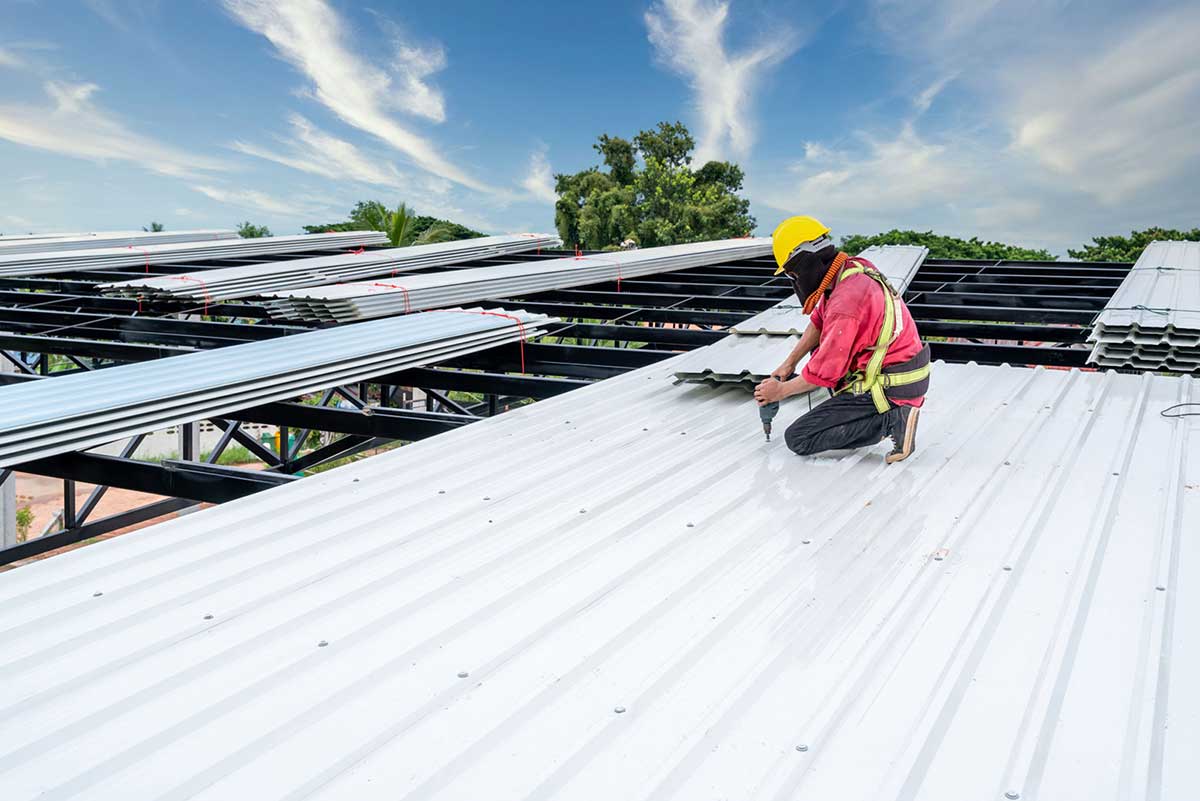
- Vapor and base layers: On many of our installs we start with a self-adhered base sheet so we are not running a torch directly against an old wood-plank deck, then build up insulation and a cover board to give the membrane a sound, fire-resistant substrate.
- Base ply: The first reinforced bitumen sheet, fully adhered to lock the system to the roof below.
- Cap ply: The top sheet, usually surfaced with ceramic granules that shield the asphalt from UV and add a walkable, abrasion-resistant finish.
- Flashings and detailing: Curbs, drains, parapets, and penetrations get reinforced multi-ply flashing, because that is where flat roofs almost always start to leak.
The granulated cap is one of the quiet advantages of this system. It gives a surface that maintenance crews and HVAC technicians can walk without tearing the membrane, which is a real consideration on buildings where rooftop units need regular service.
Why Mod-Bit Suits the Rhode Island Climate
New England weather is what shortens flat-roof life here, and mod-bit answers several of those stresses directly. Heavy snow sits on low-slope roofs for weeks at a stretch, and the weight pushes meltwater across the surface and into any weak seam. A multi-ply system gives that water several bonded layers to get through instead of one. Freeze-thaw cycling flexes the membrane day after day all winter, and SBS-modified sheets are built to stretch and recover through exactly that movement. Nor'easters drive wind and rain hard against parapets and flashings, and reinforced multi-ply flashing details hold up to that punishment far better than a single lap of membrane. On coastal commercial buildings around Newport, Aquidneck Island, the South County shore, and out to Block Island, salt air corrodes exposed metal edge details, and we pair the membrane with corrosion-resistant edge metal so the perimeter does not become the weak point.
Where We See Mod-Bit Make the Most Sense
Modified bitumen is not the answer for every roof, but there are buildings where it clearly is.
- Mill and manufacturing buildings with dense rooftop penetrations and equipment that demand a tough, walkable surface
- Roofs in the Quonset Business Park and similar industrial settings where foot traffic and mechanical service are constant
- Buildings in Providence's downtown and hospital district where a fire-conscious, multi-ply assembly fits the construction and the use
- Complex or heavily detailed roofs where multi-ply flashing outperforms single-ply at the penetrations
Maintenance and the Long Service Life
One reason owners keep choosing modified bitumen is that it is straightforward to maintain and easy to repair. Because the system is asphalt-based and multi-ply, a damaged area can be cut out and patched with new plies that bond into the existing roof, rather than requiring a specialty weld or a full section replacement. When a maintenance crew or an HVAC contractor scuffs the granulated cap, the underlying plies are still doing their job, and the repair is simple. We can also surface a mod-bit roof with a reflective coating later in its life to cut heat gain and extend its years, which is a practical option for buildings looking to get more out of a roof that is otherwise sound.
That repairability pairs well with the realities of Rhode Island's older commercial buildings, where roofs get modified, cut into for new equipment, and worked on for decades. A roof you can patch cleanly is a roof that lasts, because small problems get fixed before they become leaks.
What We Look At Before Specifying a System
Before we recommend a mod-bit buildup, we check the deck type and its combustibility, the existing slope and drainage, how much foot traffic and equipment the roof carries, and how the building will keep operating during the work. Those answers decide whether we go SBS or APP, how we adhere the base layers, and how we phase the installation to keep the building dry throughout.
If you are weighing a modified bitumen roof for a commercial building anywhere in Rhode Island, we are glad to walk the roof with you and give you a straight read on whether this system fits the building and how the installation would run. Contact us to set up a roof assessment.
 Acrylic Roof Coatings in Providence, RI
 Auto Dealership Roofing in Providence, RI
 Built Up Roofing in Providence, RI
 Church Roofing in Providence, RI
 Commercial Re-Roofing in Providence, RI
 Commercial Roof Inspection in Providence, RI
 Providence
 Warwick