Roofing for Self-Storage Facilities Across Rhode Island
Self-storage roofs cover a lot of ground and protect spaces where a single leak does outsized damage. A tenant rents a unit on the assumption that whatever they put inside it stays dry, and one wet ceiling can mean ruined furniture, paperwork, or inventory, a refund, and a review that costs the operator far more than the repair. We roof storage facilities of every layout in Rhode Island, from single-story drive-up rows to multi-story climate-controlled buildings, and we approach each one with the understanding that the roof is the product the operator is really selling.
Storage development in this state tends to follow the highway and commercial corridors, and we work on facilities along the Route 2 and Route 1 commercial strips, around the industrial areas near Quonset Business Park in North Kingstown, and throughout the suburban towns ringing Providence. Older facilities, especially conversions of former mill and warehouse buildings in cities like Pawtucket and West Warwick, bring their own roofing challenges, since the original low-slope roofs over those nineteenth-century structures were never designed for the long, watertight service a storage operator needs.
Long Roof Spans Meet Hard New England Winters
The defining feature of a storage roof is its area. A single building can run a wide, uninterrupted span, and that geometry interacts badly with Rhode Island winters. When a nor'easter loads that surface with heavy, wet snow, the weight is substantial, and on the metal roofs common to drive-up storage, the snow slides, drifts, and piles unevenly against valleys and walls. As the snowpack goes through repeated freeze-thaw cycles, water works into every seam, lap, and fastener penetration it can find.
Metal storage roofs are especially vulnerable at the fasteners. Each screw is a hole through the panel, and the rubber washers under those screws harden and shrink over years of thermal cycling and UV exposure. Once they fail, water tracks down the fastener and into the building below. On long single-story rows the roof also expands and contracts across its full length with every swing in temperature, and that movement slowly loosens panel laps and end seams if the system wasn't detailed to accommodate it. We look hard at all of this when we assess an existing facility.
Roof Systems We Install on Storage Buildings
The right system depends on the building. For metal-roofed drive-up storage, a retrofit metal roof or a metal-over-metal recover can restore the building without a disruptive tear-off, and where the existing panels are still structurally fine, a fluid-applied coating system seals the seams and fasteners and reflects heat off the roof. On flat and low-slope storage buildings, including the multi-story climate-controlled type, we install single-ply membranes such as TPO and EPDM that give a continuous, fully sealed surface with far fewer penetrations than a fastened metal roof.
- Retrofit and recover metal roof systems for drive-up storage rows
- Fluid-applied coatings to seal seams and fasteners and extend the life of existing metal
- TPO and EPDM single-ply membranes for low-slope and climate-controlled buildings
- Re-flashing and re-detailing at walls, parapets, and rooftop penetrations
Coatings as a Cost-Effective Path
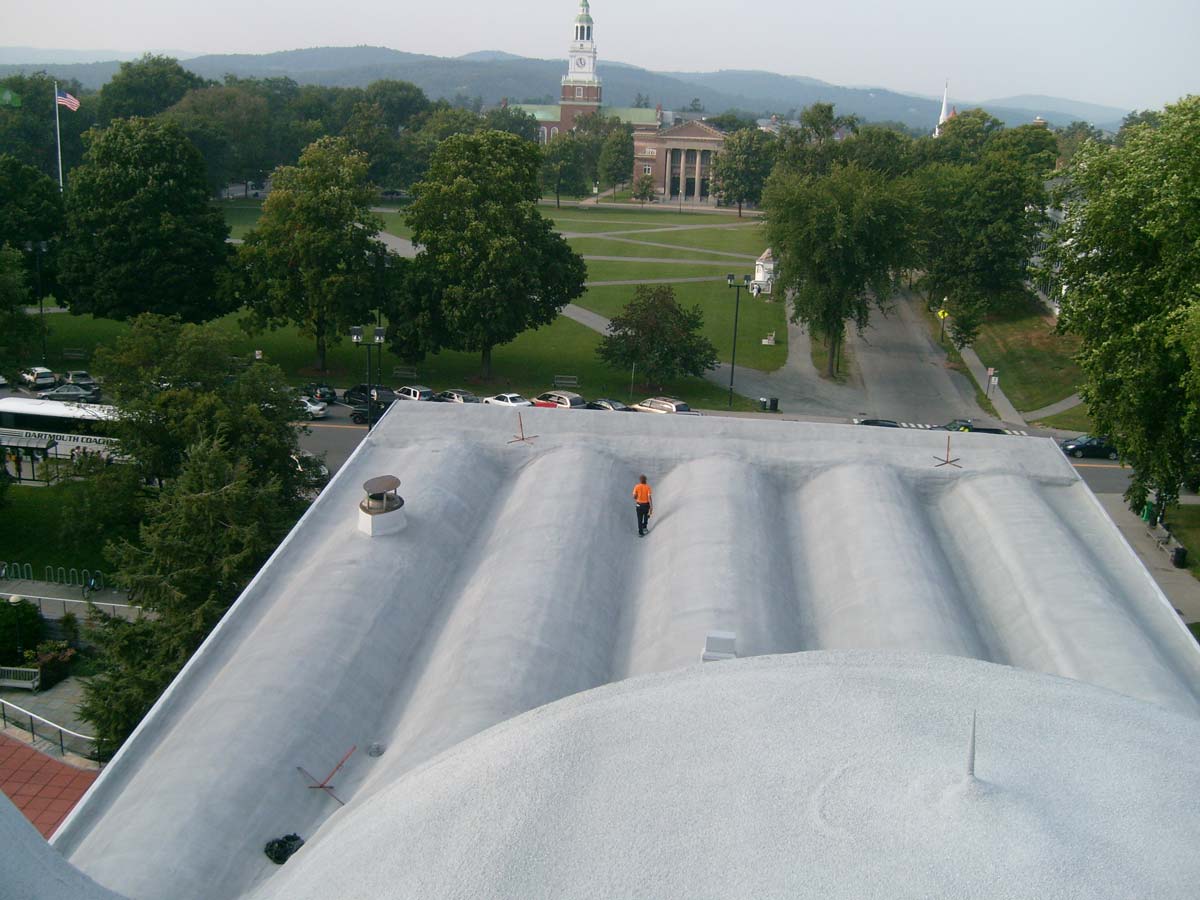
For a lot of storage operators, a coating is the most sensible move. When the roof is leaking at the seams and fasteners but the panels and deck are otherwise sound, a coating system restores a watertight surface at a fraction of a full replacement and avoids exposing tenant units to the weather during a tear-off. A reflective coating also lowers rooftop temperatures, which matters on climate-controlled buildings where cooling load directly affects operating cost. We'll tell you honestly whether your roof is a candidate for coating or whether it's far enough gone that replacement is the better investment.
Keeping Tenant Units Dry During the Work
The operational reality of a storage facility shapes how we work. We can't simply close the building, because tenants need access and the operator can't suspend revenue. So we sequence the work to keep occupied units protected, complete sections in a way that leaves nothing exposed overnight, and coordinate with the manager around gate access, traffic through the drive lanes, and any units that need to be temporarily off-limits. The goal is a finished roof with no water intrusion incidents along the way and no tenants caught off guard.
Statewide Service and the Coastal Factor
We cover self-storage facilities in all 39 Rhode Island cities and towns. Facilities in the coastal corridor through South County, on Aquidneck Island, and out toward Newport sit in salt-laden air that corrodes panels, fasteners, and flashings faster than inland sites, so we specify corrosion-resistant materials and detailing for those buildings. Inland, the priority shifts toward snow load and freeze-thaw performance. Either way, we match the roof system to the site rather than applying the same spec everywhere.
Protect Your Tenants and Your Reviews
A dry storage facility keeps tenants renewing and keeps your reputation intact, and the roof is what makes that possible. Whether you're chasing a stubborn leak in one building or planning roof replacement across a whole site, we'll assess the condition of your roofs, identify where they're failing, and lay out your options in plain terms with realistic costs. Get in touch and we'll schedule a walkthrough of your facility.
 Acrylic Roof Coatings in Providence, RI
 Auto Dealership Roofing in Providence, RI
 Built Up Roofing in Providence, RI
 Church Roofing in Providence, RI
 Commercial Re-Roofing in Providence, RI
 Commercial Roof Inspection in Providence, RI
 Providence
 Warwick