Roofing for Rhode Island Museums, Galleries, and Cultural Facilities
A museum roof has a job no other commercial roof has: it stands between the weather and objects that cannot be replaced. A leak over a gallery is not a maintenance ticket, it is a threat to a painting, a textile, an archive, or an artifact that no insurance check can restore. Cultural facility roofing is the discipline of keeping water away from irreplaceable collections while a building stays open to the public. We work on museums, galleries, historical societies, performing-arts buildings, and cultural facilities throughout Rhode Island, from the historic house museums and mansions of Newport to the gallery and archive buildings of the Providence cultural district and the small-town historical societies tucked into village centers across the state.
What Is Under the Roof Changes Everything
On most buildings the worst case of a leak is damaged drywall and lost time. In a museum the worst case is a ruined object that took a century to acquire and cannot be acquired again. That single difference governs how we approach every cultural roof. Water intrusion has to be treated as unacceptable, not merely inconvenient, which means redundancy in the details, conservative specifications, and no shortcuts at the flashings and penetrations where roofs actually fail. Equally important, many collections live in tightly controlled environments, and the roof is part of that control. A roof assembly that lets the building's humidity and temperature swing, or that drives condensation into the deck, undermines the climate the collection depends on. We design and repair these roofs with the contents in mind, not just the structure.
Rhode Island's Cultural Buildings Are Often Historic
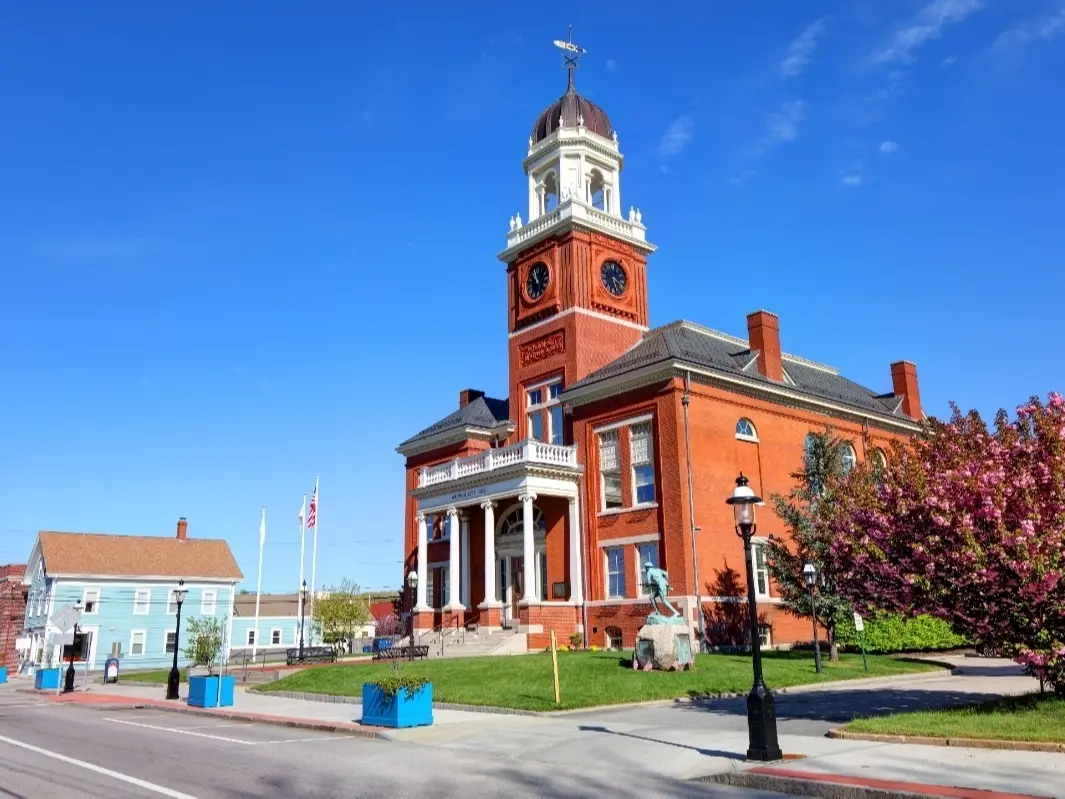
A large share of Rhode Island's cultural institutions occupy historic architecture, and that shapes the roof more than anything else. Newport's house museums and Gilded Age mansions carry steep-slope slate, copper, and standing-seam metal roofs that are themselves significant, visible from the street, and almost always under historic-district and preservation review. Providence's older gallery, library, and society buildings mix steep-slope historic roofs with low-slope additions added over the years. Small historical societies across the thirty-nine towns occupy nineteenth-century structures whose roofs have been repaired by many hands. And purpose-built modern galleries and arts centers carry low-slope membrane roofs crowded with the HVAC equipment that keeps the climate stable. These demand opposite skill sets, and we work across all of them.
Historic Roofs Versus Modern Membrane
The two ends of the cultural-facility spectrum call for entirely different work, and treating one like the other does real harm.
- Slate, copper, and historic metal. On a Newport mansion or a nineteenth-century society building, the roof is a preservation asset. These call for in-kind repair, matched materials, and methods that respect the original detailing and satisfy historic-district review, not a low-slope overlay or a modern substitution that erases the building's character.
- Low-slope membrane on galleries and additions. Modern arts buildings and the additions grafted onto older institutions carry TPO, PVC, EPDM, or modified bitumen, often loaded with rooftop air handling, and these need correct flashing, drainage, and seam work to keep galleries dry.
- Built-up roofs over archives. Older flat roofs over collection storage and archive space are frequent worry points, where a single open seam threatens documents and objects below.
- Skylights and clerestories. Galleries are full of daylighting, and skylights and their curbs are classic leak sources directly over exhibition space.
Working Over Open Galleries and Collections
A museum cannot simply close for a roof, and the spaces directly under the roof hold both the public and the collection. That reality drives how we sequence the work. Demolition and fastening are scheduled around public hours, lectures, and events. Over occupied galleries and collection storage we build in protection and dry in every opened section before we leave it, so a passing nor'easter never finds its way onto an object below. Where the collection is especially sensitive, we coordinate with the institution's building occupants and conservators so works can be moved, covered, or temporarily relocated before we open the roof above them. Material staging, debris removal, and crane lifts get routed away from public entrances and the loading paths used to move art. The goal is that visitors keep coming and the collection stays safe while the roof gets replaced over their heads.
The Roof as Part of Climate Control
Collections care about more than just liquid water. Temperature and relative humidity have to stay within tight ranges, and a poorly built roof assembly works against the building's climate systems. Trapped moisture in the insulation, condensation on the underside of a cold deck, and air leakage at the roof plane all undermine the stable environment a collection needs and can damage objects slowly even when no leak is visible. We pay attention to the insulation and vapor strategy of a cultural roof, not just its waterproofing layer, so the assembly supports the building's environmental control instead of fighting it.
New England Weather Against Irreplaceable Contents
Rhode Island's climate is hard on these roofs, and the contents underneath turn every failure into a potential loss. Heavy, wet winter snow loads broad low-slope gallery roofs for weeks, and freeze-thaw works meltwater into any seam or flashing that has begun to open. Ice dams form at the eaves of the historic slate and metal roofs on Newport's mansions and the older society buildings, backing water up under the roofing and into the walls and ceilings of the rooms below. Nor'easters drive rain into parapets, skylight curbs, and equipment. Coastal institutions on Aquidneck Island and along the South County shore take salt air that corrodes copper, metal flashings, fasteners, and rooftop equipment faster than it would inland. We detail drainage, flashings, and edge metal for real Rhode Island winters and specify for salt where the building sits near the water, because the margin for error over a collection is effectively zero.
Roof Systems for Cultural Facilities
We match the system to the building, its historic status, and the sensitivity of what it shelters.
- Slate, copper, and standing-seam metalrepaired or restored in kind on historic museums and mansions, with detailing that satisfies preservation review.
- PVC and TPO single-plyon modern galleries and additions, reflective membranes that reduce summer cooling load and install cleanly over occupied space.
- EPDM, a long-proven rubber membrane that handles cold, snow load, and thermal cycling.
- Roof coatings and restorationto extend a serviceable low-slope membrane where full replacement over a collection is best deferred and planned.
Assessments and Long-Range Planning
Cultural institutions plan and fund roofs differently from commercial owners, often through capital campaigns, grants, and board approval that take time. We provide straight condition assessments that tell you how much life a roof has left, where it is at risk, and when replacement realistically needs to happen, so a museum or society can plan and raise funds on a real timeline instead of facing an emergency over the collection. Every recommendation comes from what we find walking the roof, and we document it clearly enough for a board or a grant application to act on.
Statewide Roofing for Cultural Institutions
We serve museums, galleries, historical societies, and cultural facilities across all thirty-nine Rhode Island cities and towns, from the historic mansions of Newport to the gallery and archive buildings of Providence and the small historical societies in village centers statewide. We will inspect the roof, weigh both preservation and collection protection, and tell you plainly whether it needs in-kind repair, restoration, or full replacement. Contact us to schedule a cultural-facility roof assessment anywhere in Rhode Island.
 Airport Terminal Roofing in Providence, RI
 Auto Dealership Roofing in Providence, RI
 Automotive Manufacturing Roofing in Providence, RI
 Bank Financial Building Roofing in Providence, RI
 Big Box Retail Roofing in Providence, RI
 Brewery Distillery Roofing in Providence, RI
 Providence
 Warwick